
Veterans
Honoring Veterans: Specialized Hospice Care for Those Who Served
Let's start with a conversation.
Free, no obligation. In person or over the phone.
Refer a patient.
Same-day admissions when the patient and family are ready.
Intake email
intake@cairohospice.comFor a time-sensitive referral, please call. The intake line is open 24/7.
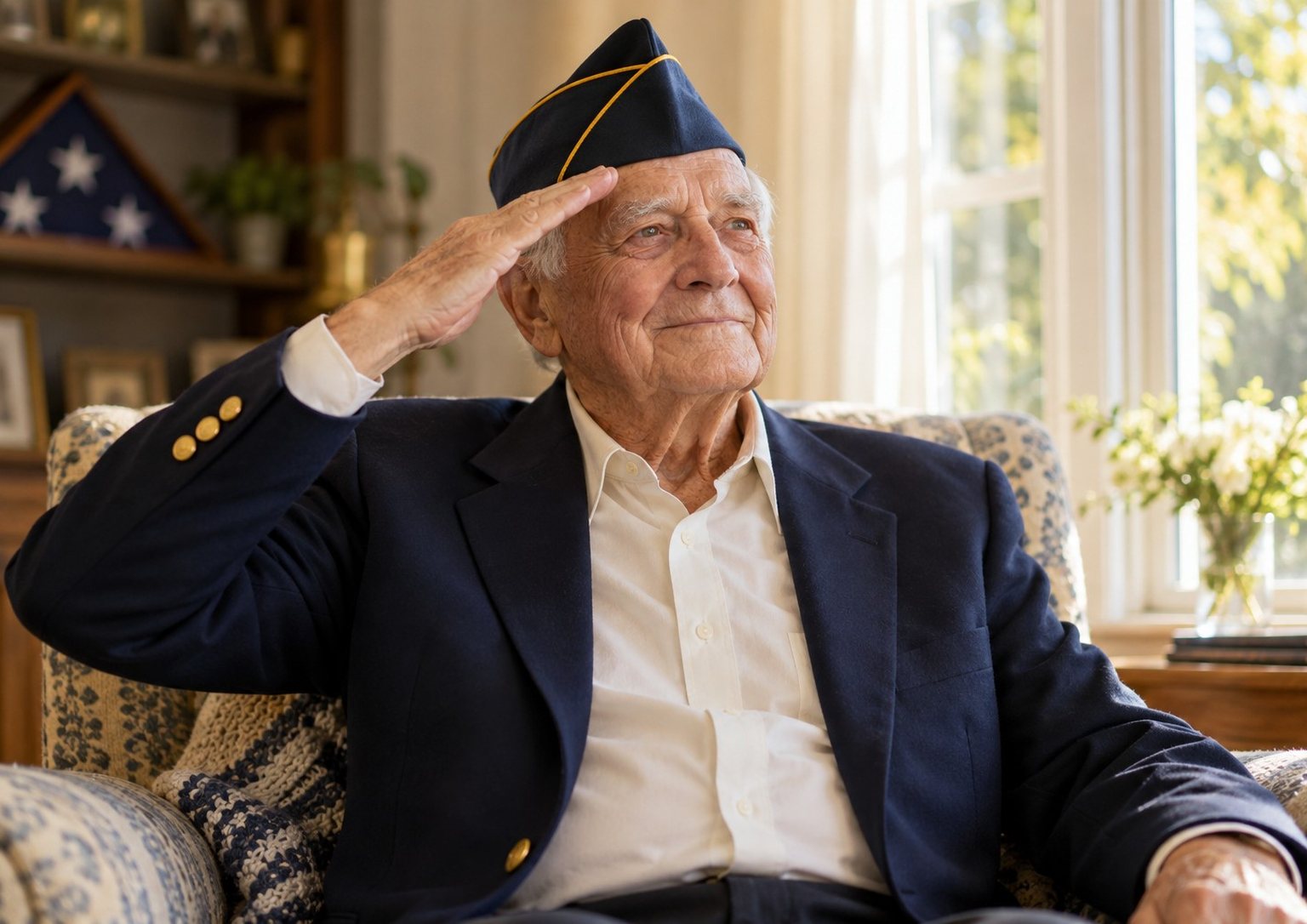
Have you ever wished your final chapter could reflect the pride and dedication you carried throughout your service? For many veterans, hospice care is about more than medicine—it’s about respect, legacy, and feeling truly understood.
Many veterans light up when they talk about the people they served with, the bonds that never break, and the sense of purpose that shaped their lives. When serious illness comes, families often want care that honors what that service meant. Not just to the country, but to the person their loved one became.
What makes veteran hospice care different?
Military service creates something unique in people. You know what it means to serve something bigger than yourself. You understand duty, honor, and looking out for your brothers and sisters in arms. These values don’t disappear when you face serious illness—they become even more important.
Veterans often carry experiences that civilian healthcare providers simply don’t understand. Maybe you saw combat, dealt with military sexual trauma, or developed health challenges related to service. Perhaps you value straight talk over sugar-coating, or you need to maintain some sense of control and dignity even when you’re vulnerable.
The Department of Veterans Affairs offers hospice guidance for veterans and families. Your service matters, and your hospice care should reflect that.
Beyond medical care: honoring your service story
Quality veteran hospice care goes deeper than managing symptoms. It’s about seeing you as the whole person you are—someone who answered the call to serve, who probably has stories that would amaze people, and who deserves to have that service recognized and honored.
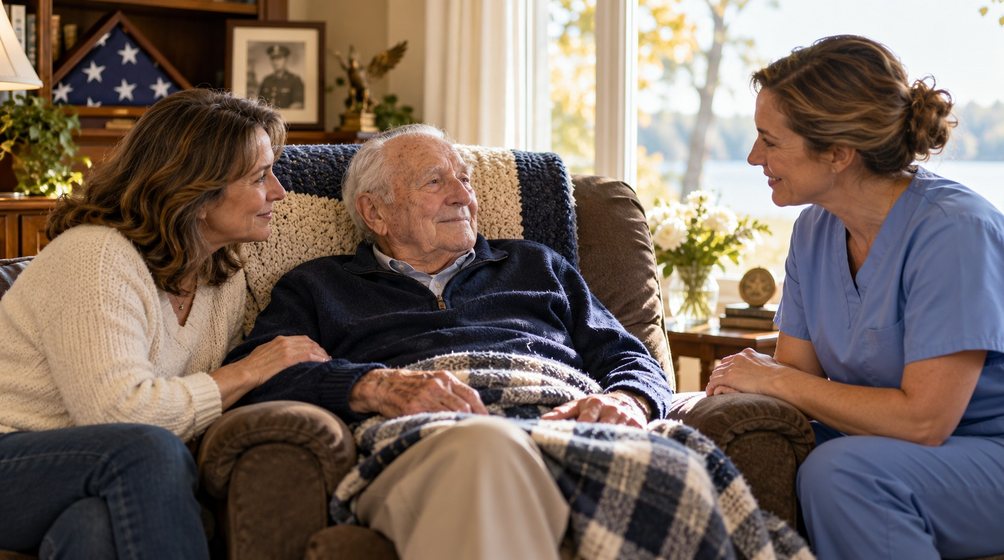
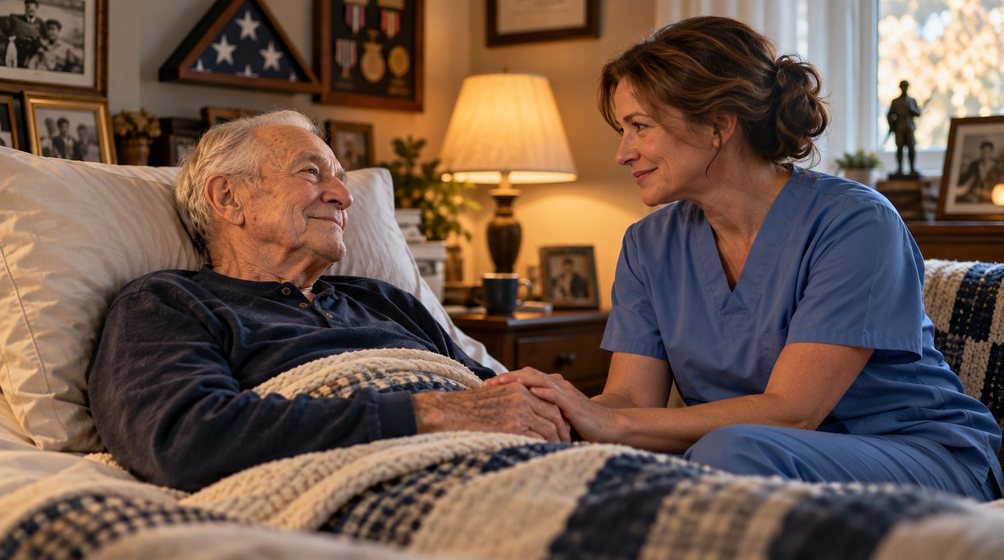
This might mean having your service branch flag displayed with pride, or coordinating military funeral honors so your family knows how to access them. Sometimes it’s as simple as having hospice staff who understand what it means when you mention your unit, your MOS, or what deployment taught you about life.
For many veterans, connecting with hospice volunteers or staff who also served creates something special. There’s an understanding that comes from shared experience—whether that’s knowing what 0500 reveille felt like, understanding why military friendships run so deep, or simply recognizing the look in someone’s eyes when they talk about service.
Navigating VA benefits and coordination
Here’s something many veterans don’t realize: you might be eligible for hospice benefits through both the VA and Medicare. According to the VA’s hospice care page, hospice is part of the VA standard medical benefits package for enrolled veterans who meet the clinical need, and the VA works closely with community hospice agencies to provide care at home.
This can feel complicated, but it doesn’t have to be. Some regions offer VA-provided hospice care, while others coordinate with community organizations to ensure you receive specialized services. VA disability compensation you already receive does not stop because you start hospice. Some veterans and surviving spouses may also qualify for VA Aid and Attendance.
The key is finding hospice providers who understand how to work with the VA system and can help coordinate your benefits seamlessly. You shouldn’t have to fight bureaucracy when you’re facing end-of-life care.
When service leaves invisible wounds
Many veterans carry more than physical scars from their service. PTSD, depression, anxiety from combat experiences, or military sexual trauma don’t disappear during hospice care. In fact, facing mortality can sometimes make these challenges feel more intense.
Do sudden noises make you jumpy? Do you feel uncomfortable in crowded spaces or when you can’t see the exit? These responses make perfect sense, and hospice teams experienced with veterans understand how trauma can affect your comfort during care.
Guidance from the National Center for PTSD says a patient’s wish not to discuss trauma should be respected, and that care should give the patient as much control as possible. Some veterans find peace in sharing their experiences with understanding listeners. Others prefer focusing on family and present relationships. Both approaches are perfectly valid.
The goal is creating an environment where you feel safe, respected, and in control as much as possible.
Supporting military families through the journey
Military families often have their own unique culture. You’ve probably moved frequently, learned to be self-reliant, and developed tight family bonds through shared challenges. You might be used to handling difficult situations independently, which can make accepting help feel uncomfortable at first.
Children and grandchildren of veterans sometimes carry complicated feelings about their loved one’s service—immense pride mixed with worry about what you experienced during deployment or combat. Hospice teams who understand military families can help navigate these emotions while honoring your service and supporting family healing.
For many military spouses, letting the hospice team carry some of the load is hard at first. Accepting that help can give the family more time and energy for each other.
Creating experiences that honor your legacy
What would feel meaningful to you during hospice care? Some veterans want formal recognition ceremonies or the chance to share their military stories. Others prefer quiet acknowledgment of their service without fanfare. There’s no right or wrong approach—it’s about what feels authentic to you.
Many veterans find comfort in having military memorabilia nearby, sharing stories about fellow service members, or connecting with other veterans who understand the military experience. Some families create memory projects that capture not just military service but the full scope of a veteran’s life—their career, family achievements, and the values they passed down.
Your stories matter. Whether you served in World War II, Korea, Vietnam, the Gulf War, Iraq, Afghanistan, or other conflicts, your experiences shaped who you became and deserve to be remembered.
Local care that understands service
Cairo Hospice is veteran owned and family owned. We serve veterans and military families across Ohio, Indiana and Pennsylvania, and we care deeply about honoring military life.
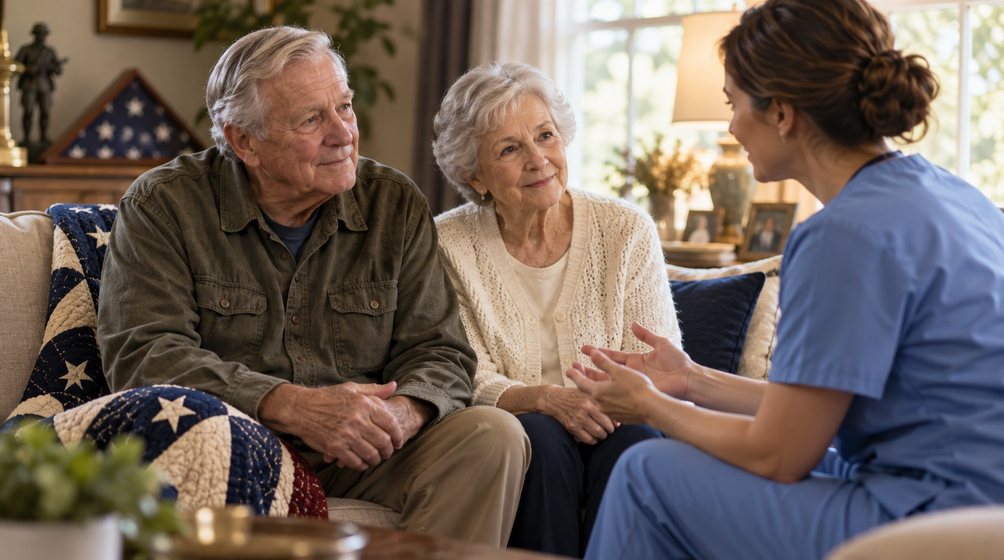
Our social workers can help your family understand the benefits that may be available. Whether you have questions about military honors or need support for health challenges related to service, we’re committed to providing care that reflects the respect you’ve earned.
Moving forward with dignity
If you’re a veteran facing serious illness, or if you’re caring for a veteran family member, know that specialized hospice care can provide support that truly understands and honors military service. You don’t have to explain what your service meant—we already understand its value.
For veterans and military families seeking hospice care that honors service and understands military culture, call Cairo Hospice at +1 (614) 910-2662. Our team will listen to what matters to you and help make sure your service is recognized.
You can also download our Complete Guide to Hospice Care for comprehensive information about services and support available to veterans and their families.
Every veteran deserves end-of-life care that honors their service while providing comfort and dignity. You served with honor—your final chapter should reflect that same respect and care.
Questions about hospice for someone you love?
Our team is here 24 hours a day. Talk it through with us, with no obligation.