

Provider Resources
Why Local Hospice Knowledge Leads to Better Patient Care
Let's start with a conversation.
Free, no obligation. In person or over the phone.
Refer a patient.
Same-day admissions when the patient and family are ready.
Intake email
intake@cairohospice.comFor a time-sensitive referral, please call. The intake line is open 24/7.
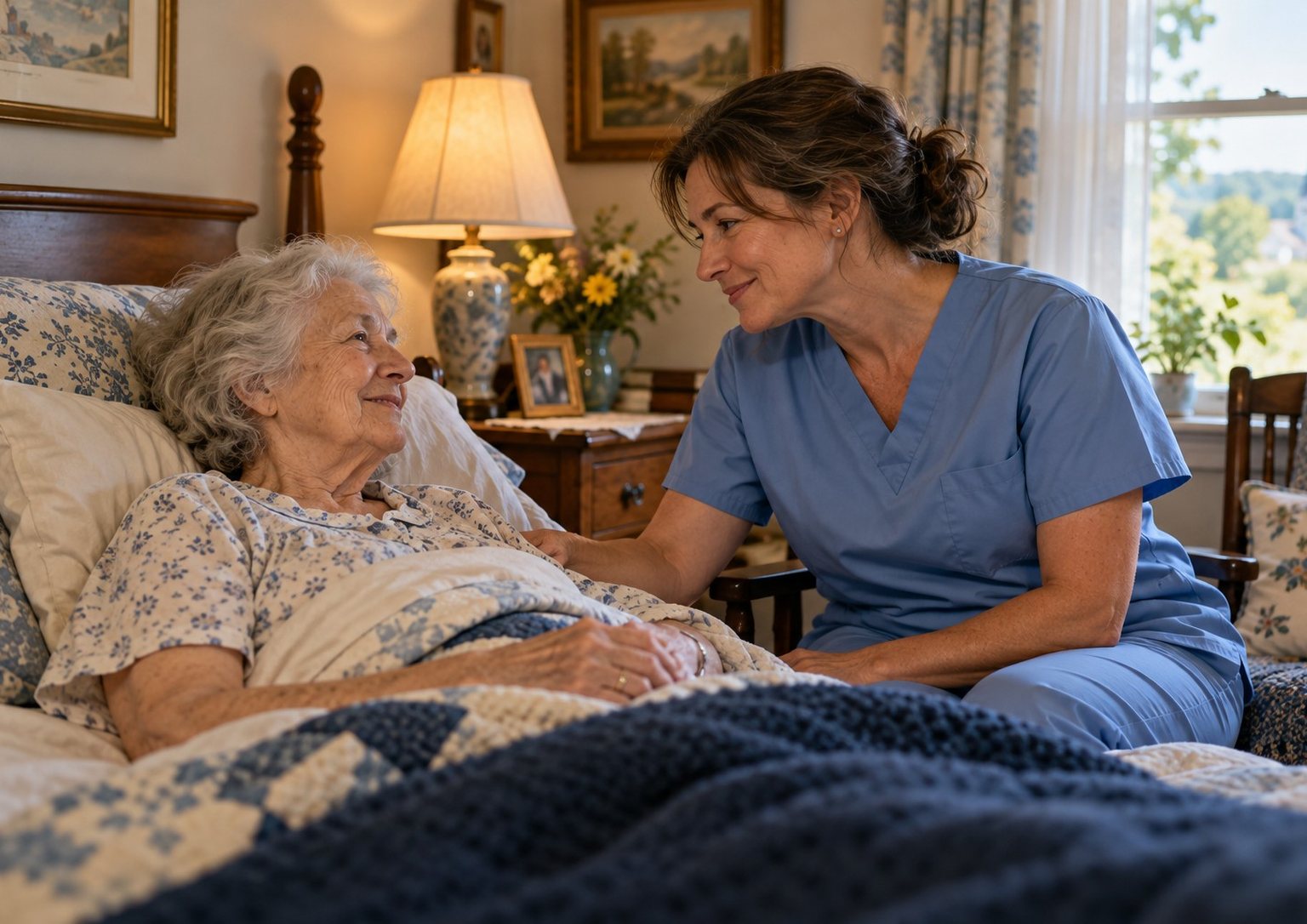
Imagine this: It’s late; the hospital is quiet. A family is gathered, anxious and unsure how to help their loved one who’s struggling with pain, fatigue, or breathlessness. The attending provider wishes the team had talked about hospice care sooner—and wonders, “Who provides hospice in our community, and how can they help right now?”
This scenario plays out across Ohio, Indiana, and Pennsylvania every day. Healthcare providers who know their local hospice options can transform these difficult moments into opportunities for comfort, control, and meaningful family time.
Early hospice referrals change outcomes
The earlier patients start hospice, the more time they have for comfort, control, and family. Providers who know local hospice teams by name, as partners in care rather than strangers, are better able to guide families through difficult moments, avoid preventable ER visits, and ensure truly personalized support.
What happens with timely hospice referrals?
- Patients receive expert symptom management before a crisis hits
- Families spend meaningful time together in familiar surroundings, not rushed hospital rooms
- Providers get proactive updates and feel part of the care plan, every step of the way
A 2014 JAMA study of Medicare patients with poor-prognosis cancers found that those enrolled in hospice had fewer hospitalizations and were less likely to die in the hospital than similar patients without hospice. Timing matters to families too. In a study of more than 100,000 bereaved family surveys, families who felt the referral came “too late” reported more unmet needs and lower satisfaction.
Why knowing your local hospice team matters
Each region has its own network of hospice providers—some specialize in advanced cancer, some in dementia, some in support for veterans. When providers connect early with their community hospice, they:
- Build trust and smooth communication channels
- Get real-time answers about eligibility, coverage, and timing
- Learn how the hospice team can work alongside their own practice—not replace it
When these relationships are strong, patients can transition to hospice more quickly, paperwork is handled efficiently, and everyone involved has clarity on what to expect.
Common barriers—and how to overcome them:
- Not knowing referral protocols: Many hospices offer quick training, printable guidelines, and liaison services
- Misunderstanding eligibility: Simple phone calls can clarify who qualifies, and some families later say they wish they had started sooner
- Feeling like hospice means “giving up”: Local hospice teams are skilled in explaining how comfort-focused care is about living well in whatever time remains
Clinical indicators that signal hospice appropriateness
Healthcare providers need clear, evidence-based guidelines for recognizing when hospice care may benefit their patients. Medicare contractors use the local coverage determination Hospice: Determining Terminal Status (L34538), which offers criteria that can guide decision-making:
General hospice eligibility indicators:
- Prognosis of six months or less if disease follows expected course
- Declining functional status despite optimal treatment
- Frequent hospitalizations or emergency department visits
- Progressive weight loss or failure to thrive
- Patient/family preference for comfort-focused care
Disease-specific considerations:
- Cancer patients: Metastatic disease with continued decline despite therapy, or a choice to stop cancer treatment
- Heart failure: Optimally treated, NYHA Class IV symptoms, with an ejection fraction ≤ 20% as supporting evidence if available
- Dementia: FAST Stage 7 criteria, speech limited to six or fewer words, unable to walk, dress, or bathe without help, plus a serious complication in the past year
It’s more than a referral—it’s an act of advocacy
Providers who ask, “Should we reach out to hospice now?” take an active role in improving their patients’ last chapter. Even a short conversation beforehand—”Here’s what hospice in our area provides; here’s how I’ll stay involved”—reassures families and puts choices back in their hands.
Framing hospice as added support rather than a replacement for current care can help patients and families feel more open to exploring it.
Best practices for effective hospice collaboration:
- Keep up-to-date contacts for nearby hospice providers
- Attend local educational events, webinars, or collaborative rounds
- Use regional networks and intake consultation lines
- Maintain ongoing communication throughout the patient’s hospice journey
What strong hospice collaboration can bring:
- Fewer emergency calls from families in crisis
- Clear, ongoing updates from hospice care teams
- Reduced stress for both patients and healthcare staff
Making the connection in your community
For healthcare providers across Ohio, Indiana, and Pennsylvania, knowing your local hospice resources means being able to offer families not just a resource, but a relationship grounded in respect and expertise.
Practical steps for building hospice partnerships:
- Schedule informational meetings with local hospice teams
- Request clinical criteria and referral guidelines
- Participate in community healthcare provider education sessions
- Establish direct communication lines for urgent consultations
Regional hospice collaboration
Cairo Hospice teams work closely with healthcare providers in the communities we serve in Ohio, Indiana and Pennsylvania, focusing on seamless transitions and ongoing collaboration rather than replacement of existing care relationships.
For immediate consultation or referral guidance:
- Call (614) 910-2662, available 24/7
Healthcare providers and families can also download our Complete Guide to Hospice Care.
The difference early knowledge makes
When healthcare providers understand their local hospice options and build collaborative relationships before crisis moments arise, patients receive more appropriate, timely care. Families experience less anxiety and more support. And providers can focus on what they do best—caring for patients—knowing they have trusted partners for end-of-life support.
The goal isn’t to refer every patient to hospice, but to ensure that when hospice care would benefit a patient and family, providers have the knowledge and relationships to make that transition smooth, timely, and beneficial for everyone involved.
Ready to strengthen your hospice collaboration? Call Cairo Hospice at (614) 910-2662 for clinical consultation, educational resources, or to discuss how we can support your patients across Ohio, Indiana, and Pennsylvania.
Questions about hospice for someone you love?
Our team is here 24 hours a day. Talk it through with us, with no obligation.