
Dementia
Creating Meaningful Moments: Activities for Dementia Patients
Let's start with a conversation.
Free, no obligation. In person or over the phone.
Refer a patient.
Same-day admissions when the patient and family are ready.
Intake email
intake@cairohospice.comFor a time-sensitive referral, please call. The intake line is open 24/7.
Caring for someone with dementia or Alzheimer’s disease presents unique challenges, but it also offers opportunities to create meaningful moments of connection and joy. While cognitive abilities may decline, the capacity for emotional connection, sensory pleasure, and moments of clarity often remains. Understanding how to engage someone with dementia through appropriate activities can significantly enhance their quality of life and provide precious moments for families to treasure.
Understanding Dementia and Activity Benefits
Dementia affects each person differently, but according to the Alzheimer’s Association, engaging in meaningful activities can provide numerous benefits regardless of the stage of disease progression:
- Reduces anxiety and agitation through familiar, comforting activities
- Keeps the person engaged and using the abilities they have
- Provides sensory stimulation that can spark memories or emotions
- Creates opportunities for connection between patients and family members
- Enhances overall quality of life during difficult transitions
- Offers structure and routine that can feel reassuring
The key is adapting activities to match current abilities while honoring the person’s history, interests, and preferences.
Sensory-Based Activities
Sensory activities often work well for people with dementia because they don’t require complex cognitive processing but can still provide pleasure and stimulation.
Touch and Texture Activities
Touch is often a source of comfort even in advanced dementia. That’s why touch-based activities can calm agitation and provide comfort when words no longer reach effectively.
Sensory boxes: Create boxes filled with different textures like soft fabrics, smooth stones, textured balls, or familiar objects from their past (vintage kitchen tools, craft supplies, or hobby items). The act of exploring these textures stimulates neural pathways and can trigger positive emotional responses or distant memories associated with these items.
Hand massage: Gentle hand and arm massage with pleasant-smelling lotions serves multiple purposes—it provides physical comfort, reduces anxiety through human touch, and the repetitive motions can be deeply soothing to an overstimulated nervous system.
Pet therapy: If appropriate, interaction with therapy animals or familiar pets provides unconditional acceptance and comfort. Animals don’t judge cognitive abilities, making interactions feel safe and natural.
Fabric exploration: Different fabric textures—silk, velvet, wool, cotton—engage the sensory system without requiring complex thinking. Many people retain muscle memory of working with fabrics from sewing, laundry, or caring for children, making this activity feel familiar and purposeful.
Visual and Light Activities
Visual activities can be a gentle way to keep someone engaged and connected.
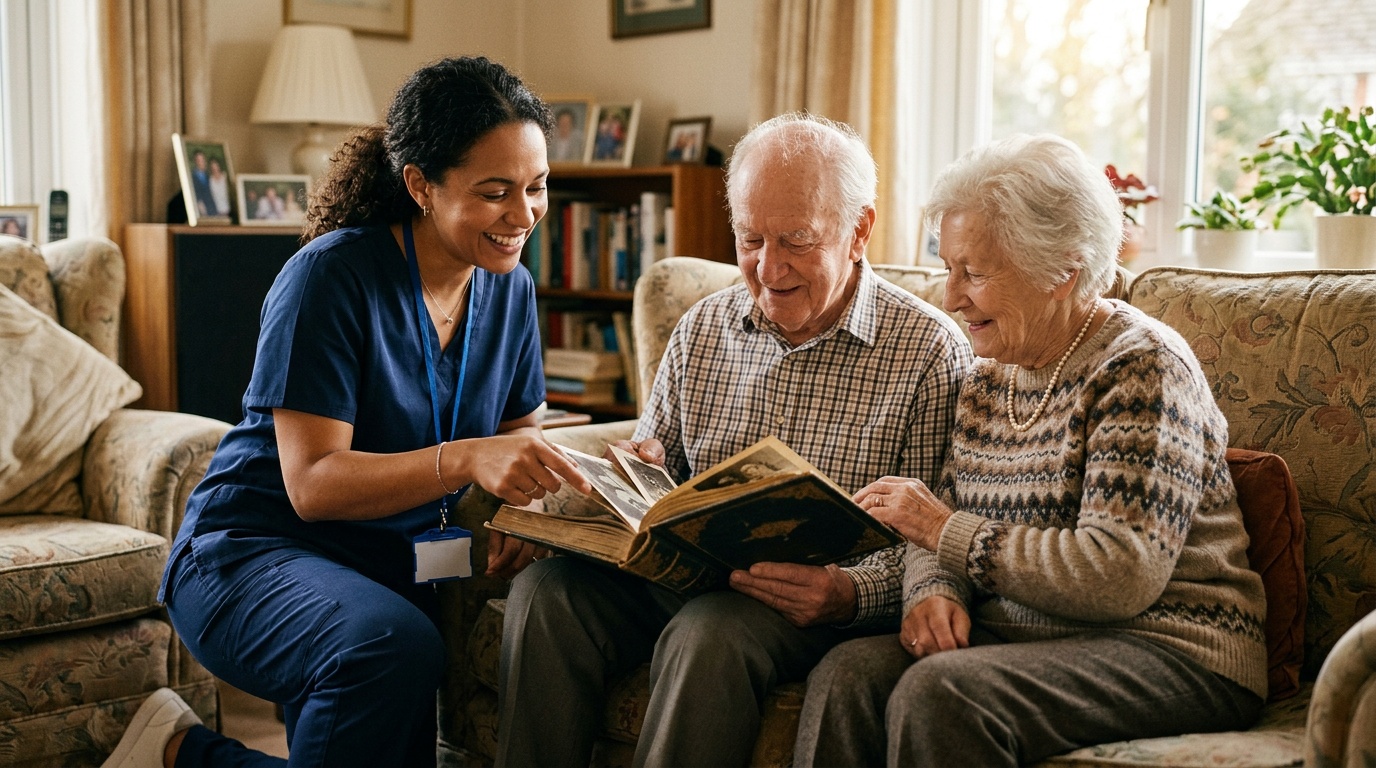
Photo albums: Looking through family photos together works because faces and emotional memories are often preserved longer than factual information. Focus on pictures from their younger years when long-term memories may be clearer and more accessible.
Nature viewing: The natural world provides constantly changing visual stimulation without overwhelming complexity. Watching birds at a feeder, observing a fish tank, or simply sitting by a window with a garden view can provide hours of peaceful engagement.
Soft lighting: Gentle colored lights or fiber optic lamps can provide visual interest and a calming focus. Bright daylight in the morning may also help with sleep patterns. The changing colors and patterns can be mesmerizing and calming.
Art appreciation: Looking at favorite paintings or art books engages the emotional centers of the brain. Even when people can no longer create art, they often retain the ability to appreciate beauty and respond emotionally to visual imagery.
Auditory Activities
Musical memories often last longer than many other memories. Music can reach people even when other forms of communication fail. This is why someone who can barely speak may still be able to sing entire songs from their youth.
Familiar music: Playing songs from their youth or favorite genres can bring comfort and recognition. The Music & Memory program uses personalized playlists, and many families and care teams find familiar music can ease anxiety and lift mood.
Nature sounds: Recordings of ocean waves, birdsong, or gentle rain can help some people relax and feel less agitated. These sounds are also non-demanding—there’s no pressure to respond or understand.
Reading aloud: Even when complex storylines become impossible to follow, the rhythm and cadence of familiar voices reading beloved stories provides comfort. The human voice itself becomes a source of connection and security.
Singing together: Simple songs, hymns, or lullabies from their past often remain accessible because singing engages procedural memory (like riding a bike) rather than episodic memory (remembering specific events). This is why someone may forget their family’s names but still remember every word to their wedding song.
Memory and Cognitive Activities
While cognitive abilities may be declining, gentle mental stimulation can still be beneficial and enjoyable.
Reminiscence Activities
Long-term memories often remain more accessible than recent memories in dementia, making reminiscence particularly valuable for maintaining identity and emotional connection.
Life story work: Create a simple photo book or memory box with items from significant periods in their life. The Family Caregiver Alliance suggests simple crafts like making a scrapbook or decorating a picture frame, and notes that familiar music can bring back fond memories.
Storytelling: Ask about their childhood, first job, or wedding day. Even if details become unclear, the emotional memories often remain vivid and can provide comfort and a sense of identity.
Historical discussions: Talk about major events from their youth—what was happening in the world when they were young adults. This connects them to their generational identity and shared cultural experiences.
Family tree exploration: Look at family photos and talk about relationships, even if the connections become confused. The emotional bonds represented in these photos often persist longer than the factual details.
Simple Cognitive Exercises
Gentle word games: Simple word association or naming categories (types of flowers, animals, colors).
Sorting activities: Organizing buttons by color, sorting pictures into categories, or arranging objects by size.
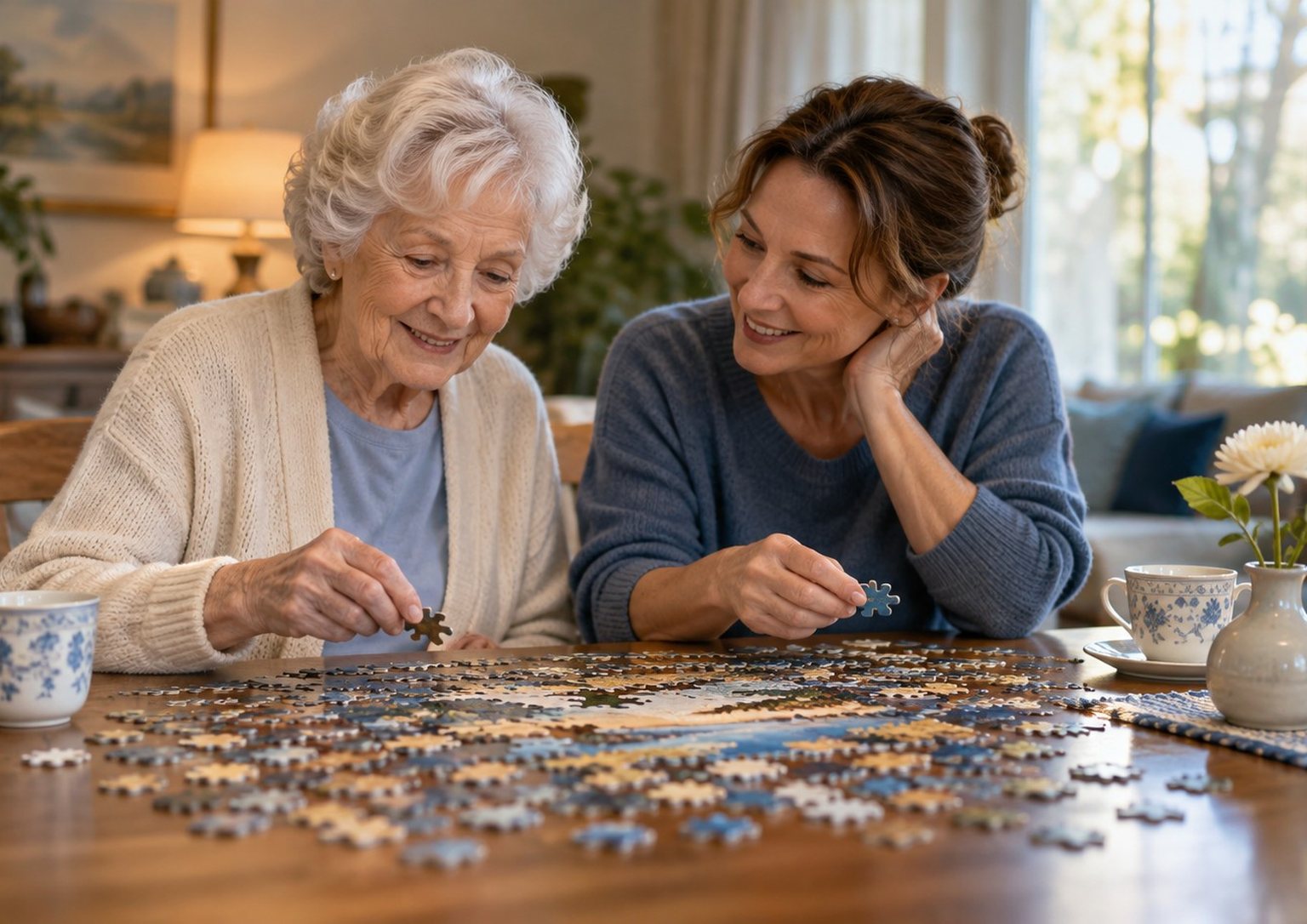
Simple puzzles: Large-piece puzzles with familiar images like landscapes, animals, or vintage scenes.
Calendar activities: Discussing the day, date, season, or upcoming holidays in a gentle, non-pressuring way.
Physical Activities and Movement
Physical activity remains important for overall health and can be adapted to current ability levels.
Gentle Exercise
The Centers for Disease Control and Prevention (CDC) encourages older adults to stay as active as their abilities and conditions allow, which can help maintain mobility and overall health.
Chair exercises: Simple arm movements, gentle stretching, or seated dancing to music can improve circulation and provide gentle stimulation without overwhelming cognitive demands.
Walking: If mobile, short walks in familiar areas, perhaps in a garden or around the house, provide both physical exercise and sensory stimulation from the environment.
Dancing: Slow dancing to familiar music, even while seated, can be emotionally meaningful and physically beneficial while engaging procedural memory that often remains intact.
Ball activities: Gently tossing a soft ball back and forth or rolling it on a table improves hand-eye coordination and provides gentle physical activity that feels playful rather than therapeutic.
Functional Activities
Engaging in purposeful tasks provides a sense of dignity and usefulness that purely recreational activities cannot match. These activities tap into deeply ingrained patterns of behavior that often persist even when other abilities decline.
Folding activities: Folding towels, sorting socks, or organizing simple items provides structure and purpose while engaging muscle memory developed over decades of daily living. The repetitive motions can be meditative and calming.
Gardening: Simple tasks like watering plants, touching herbs, or arranging flowers connect people to the natural world while providing sensory stimulation through touch, smell, and sight. Gardening also offers a sense of nurturing and growth that can be deeply meaningful.
Cooking participation: Stirring ingredients, washing vegetables, or helping with simple food preparation engages multiple senses and connects to lifelong patterns of caring for family. Even when complex cooking becomes impossible, simple kitchen tasks can provide a sense of contribution and normalcy.
Household tasks: Dusting, wiping tables, or other familiar activities adapted to current abilities help maintain identity and purpose. These tasks feel “normal” and can provide structure to otherwise confusing days.
Creative and Expressive Activities
Creative activities can provide emotional outlets and opportunities for self-expression.
Art and Craft Activities
Simple painting: Watercolors or finger painting without pressure for specific outcomes.
Collage making: Cutting and pasting pictures from magazines to create simple collages.
Clay work: Manipulating play dough or clay can be both therapeutic and creative.
Craft projects: Simple projects like making greeting cards, decorating picture frames, or creating seasonal decorations.
Musical Expression
Instrument playing: Simple instruments like tambourines, maracas, or keyboards for musical expression.
Singing participation: Joining in favorite songs, hymns, or simple children’s songs.
Musical storytelling: Creating simple stories with musical accompaniment.
Rhythm activities: Clapping hands or tapping feet to familiar rhythms.
Family Engagement Strategies
Involving family members in activities can strengthen relationships and create meaningful shared experiences.
Creating Connection
Share familiar activities: Engage in activities the person enjoyed throughout their life—cooking favorite recipes, gardening, or crafts.
Photo sharing: Look through family albums together, sharing stories and memories.
Letter writing: Help them write simple notes or cards to family members, focusing on expressing love rather than complex communication.
Legacy projects: Record their voice telling stories, or help them create simple gifts for family members.
Communication Tips
Follow their lead: Let the person guide the activity based on their interest and energy level.
Focus on emotions: Even if facts are confused, validate the emotions they’re expressing.
Stay present: Don’t correct mistakes unless safety is involved; focus on the moment rather than accuracy.
Celebrate small wins: Acknowledge and celebrate any engagement or pleasure they show in activities.
Adapting Activities by Dementia Stage
Activities should be tailored to the person’s current cognitive and physical abilities.
Early Stage Dementia
- More complex activities like board games, reading, or detailed crafts
- Independent participation in familiar hobbies
- Social activities with friends and family
- Travel or outings to familiar places
Middle Stage Dementia
- Simplified versions of favorite activities
- More supervision and guidance
- Focus on sensory and emotional experiences
- Shorter activity sessions with more frequent breaks
Late Stage Dementia
- Sensory-focused activities that don’t require active participation
- Gentle touch, familiar music, and visual stimulation
- Comfort-focused activities like hand massage or aromatherapy
- Simple presence and emotional connection
Creating a Supportive Environment
The environment plays a crucial role in successful activity engagement.
Physical Environment
Reduce distractions: Minimize background noise, clutter, and overstimulation.
Ensure safety: Remove potential hazards while maintaining a home-like atmosphere.
Provide good lighting: Adequate lighting helps with visual activities and reduces confusion.
Create familiar spaces: Use personal items and familiar decorations to create comfort.
Emotional Environment
Maintain patience: Allow extra time and don’t rush activities.
Stay flexible: Be ready to change activities if one isn’t working.
Focus on enjoyment: The goal is pleasure and connection, not achievement.
Celebrate participation: Any level of engagement is a success worth acknowledging.
When to Seek Professional Support
While family members can provide wonderful activity engagement, professional support can be valuable when care needs become more complex. It helps to know who can step in when you need more help:
- Activity directors trained in dementia care can suggest new approaches
- Occupational therapists can help adapt activities to changing abilities
- Music or art therapists can provide specialized interventions
- Hospice care teams can integrate meaningful activities into comprehensive comfort care
Finding Joy in Small Moments
Remember that meaningful moments don’t always come from planned activities. Sometimes the most precious connections happen during:
- Quiet moments of simply sitting together
- Spontaneous singing or humming
- Gentle physical affection like holding hands
- Sharing a favorite snack or drink
- Watching the sunrise or sunset together
The goal isn’t to “fix” or dramatically improve cognitive function, but to create moments of peace, comfort, and connection that enhance quality of life for both the person with dementia and their loved ones.
Resources for Continued Support
Creating meaningful moments for someone with dementia requires ongoing learning and adaptation. When activities become challenging or when care needs increase, it may be time to consider additional support options, including hospice care for those with advanced dementia.
Many families don’t realize that hospice care can be suitable for people with advanced dementia. Medicare’s coverage guidance, Hospice: Determining Terminal Status (L34538), describes the signs doctors look for. These include being unable to walk, dress or bathe without help, very limited speech, and complications such as serious infections or significant weight loss. Hospice care focuses on comfort and quality of life while supporting families through the journey.
At Cairo Hospice, our team understands the importance of dignity and meaningful connection throughout the care journey. We work with families to include familiar activities in comfort care plans that honor the person’s history and preferences.
Ready to learn more about hospice care options? Download our comprehensive Hospice Care Guide for detailed information about when hospice becomes appropriate, what services are included, and how to prepare for this transition. This resource helps families understand their options and make informed decisions about care.
Download the free Hospice Care Guide
For personalized guidance on dementia care or to discuss hospice care options, call Cairo Hospice at (614) 910-2662. Our compassionate team can help you navigate the complex decisions involved in dementia care while ensuring your loved one maintains dignity and quality of life.
Questions about hospice for someone you love?
Our team is here 24 hours a day. Talk it through with us, with no obligation.