
By Condition
When Sooner is Better: The Benefits of Early Hospice Care
Let's start with a conversation.
Free, no obligation. In person or over the phone.
Refer a patient.
Same-day admissions when the patient and family are ready.
Intake email
intake@cairohospice.comFor a time-sensitive referral, please call. The intake line is open 24/7.

The word “hospice” can bring up a host of complex emotions. For many families, it’s a word tied to final days, loss, and the idea of giving up. But a growing body of research is painting a very different picture, one where hospice is not about the end of life, but about the quality of life. Research on early palliative care, and on families’ views of hospice timing, suggests that starting support sooner helps.
This shift in understanding is crucial. Instead of viewing hospice as a last resort, we can see it as a vital layer of support that provides comfort, dignity, and control when it’s needed most. It’s about ensuring that a person’s final months are lived as fully and peacefully as possible, surrounded by a team dedicated to their physical, emotional, and spiritual well-being.
Let’s explore what the research says and how embracing hospice care earlier can transform the end-of-life journey for everyone involved.
Redefining Hospice: More Time for Quality Living
One of the most significant barriers to hospice is the misconception that it hastens death or is only for the last few days of life. In reality, hospice is designed to provide care for individuals with a life expectancy of six months or less, should their illness run its normal course. Initiating this care earlier provides a crucial window of opportunity for the hospice team to manage symptoms effectively.
When pain and other distressing symptoms like shortness of breath or anxiety are under control, patients can focus on what truly matters to them. Early palliative care shares the hospice focus on comfort, and it can improve quality of life. This isn’t about giving up on treatment; it’s about adding a layer of compassionate support focused entirely on comfort and dignity.
The Evidence for Better Patient and Family Experiences
The case for earlier support is not just anecdotal. A landmark 2014 report from the Institute of Medicine, “Dying in America,” emphasized that providing high-quality end-of-life care is a fundamental professional responsibility. Research has also linked earlier palliative support with better experiences for patients and families.
For example, a well-known 2010 study of patients with advanced lung cancer found that those who received early palliative care alongside standard cancer treatment had better quality of life and were less likely to receive aggressive care at the end of life. Palliative care is closely related to hospice, but it isn’t the same service. Less aggressive care can mean fewer unwanted hospital stays and procedures that may not improve quality of life.
More Than Medical Care: Holistic Support for the Whole Family
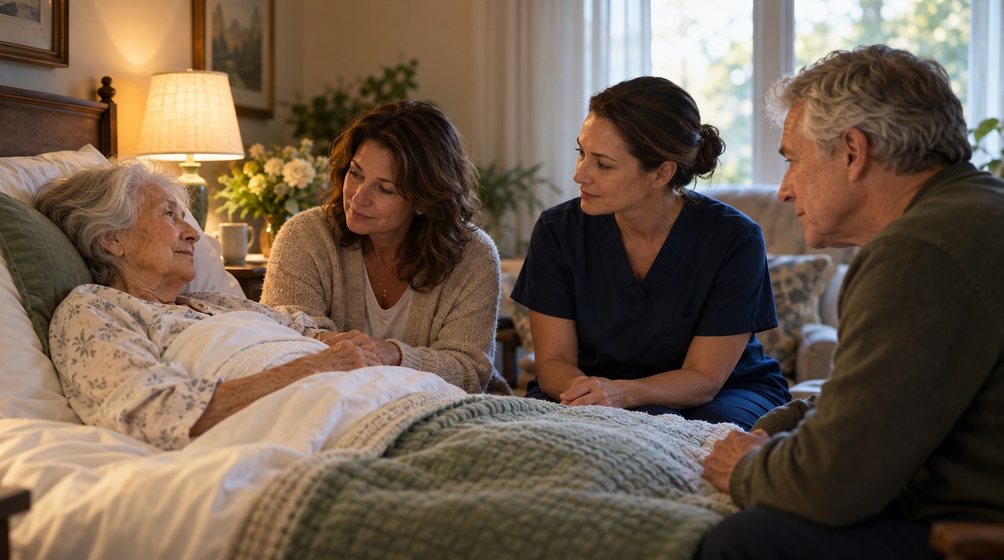
Hospice is unique because it extends care beyond the patient to include the entire family. An early referral gives the interdisciplinary hospice team—including nurses, aides, social workers, chaplains, and volunteers—more time to build trusting relationships. This support becomes a lifeline for families navigating the emotional and logistical challenges of caregiving.
Social workers can connect families with community resources, chaplains can provide spiritual support tailored to their beliefs, and bereavement counselors can offer grief support for up to a year after a loved one’s passing. By starting hospice sooner, the entire family unit is wrapped in a blanket of support, reducing caregiver stress and allowing for more meaningful moments and connection.
Honoring Wishes and Ensuring Dignity
Ultimately, the goal of hospice is to honor a person’s wishes and ensure they can live their final chapter with dignity and peace. Late referrals, often made in a moment of crisis, can rob patients and families of the opportunity to have important conversations and make thoughtful decisions. An early start to hospice care facilitates these discussions, ensuring that the care plan aligns perfectly with the patient’s values and goals.
Integrating supportive care earlier is a key part of patient-centered healthcare. It empowers patients, supports families, and shifts the focus from aggressive, often burdensome, treatments to comfort, peace, and quality of life.
Navigating these decisions can feel overwhelming, but you don’t have to do it alone. The right support, started at the right time, can make all the difference. For families considering hospice care and seeking to maximize comfort and quality of life, call Cairo Hospice at (614) 910-2662. Our team is here to answer your questions with compassion and clarity.
You can also download our Complete Guide to Hospice Care for comprehensive information to help guide your journey.
Key Takeaways
- Research on early palliative care links earlier support to improved quality of life and better patient and family experiences.
- Patients who get palliative support sooner often receive less aggressive, unwanted medical care near the end of life.
- Early referral allows the hospice team more time to manage symptoms effectively and provide holistic emotional, spiritual, and practical support to the entire family.
Questions about hospice for someone you love?
Our team is here 24 hours a day. Talk it through with us, with no obligation.