
Hospice Basics
What Happens After Death: Hospice Support and Next Steps
Let's start with a conversation.
Free, no obligation. In person or over the phone.
Refer a patient.
Same-day admissions when the patient and family are ready.
Intake email
intake@cairohospice.comFor a time-sensitive referral, please call. The intake line is open 24/7.
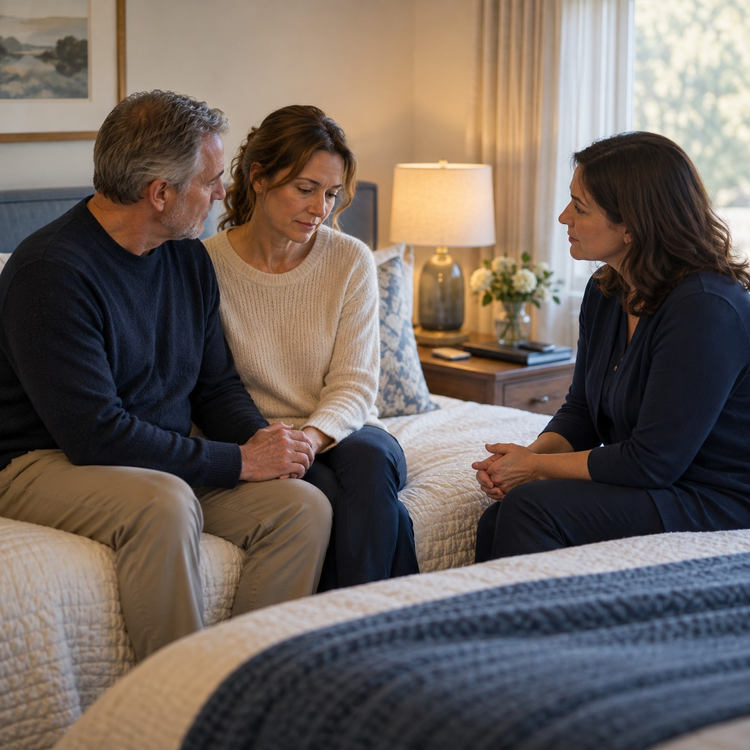
The moments following the death of a loved one are profound and often filled with a mix of sorrow, love, and uncertainty. When a person is under hospice care, this transition is anticipated, allowing for a process that is gentle, dignified, and supportive, rather than clinical and chaotic. Knowing what to expect can bring a sense of peace during a deeply emotional time.
The goal of hospice is to ensure comfort and honor the wishes of the patient and their family, a philosophy that extends through the final moments of life and into the period immediately following. This guide explains the supportive steps your Cairo Hospice team will take to guide you through this process with compassion and expertise.
The First, Most Important Call: Contact Your Hospice Nurse, Not 911
When a death is expected under hospice care, the first call you should make is to your hospice nurse, not 911. This is a critical distinction. Calling 911 can set off an emergency response that may be jarring and distressing for the family. As the National Institute on Aging explains, if the person was in hospice, a plan for what happens after death will likely already be in place. Because the death was anticipated, the calm, trained presence of your hospice nurse is the most appropriate and supportive response.
Your hospice team is available 24/7. When you call, a nurse will offer immediate guidance over the phone and arrange to come to your home or the care facility. They are prepared to manage the situation with professionalism and sensitivity, ensuring a peaceful environment.
What the Hospice Nurse Does Upon Arrival
When the hospice nurse arrives, they take on the logistical and clinical responsibilities, allowing your family to focus on being together. The nurse’s first role is to confirm the death and, where state rules allow, officially pronounce it. Following this, they will gently perform after-death care, which can include bathing and dressing your loved one in clothing you have chosen. This is done with the utmost respect and reverence.
The nurse also handles the necessary paperwork, such as documenting the time of death and beginning the process for the death certificate. This compassionate management of administrative tasks relieves the family of an immediate burden.
Time for Family, Rituals, and Goodbyes
Hospice care honors the belief that every moment matters, and this includes the quiet time after a loved one has passed. There is no rush. Your family will have private, unhurried time to sit with your loved one, share memories, say final goodbyes, and begin to process your grief. This is an important time to accommodate any religious, spiritual, or cultural rituals that are meaningful to you and your family.
Coordinating with the Funeral Home
As part of the hospice planning process, a funeral home is typically chosen in advance. Once your family has had the time you need, the hospice nurse will contact the funeral home on your behalf to coordinate the transfer of your loved one into their care. This seamless coordination is another way the hospice team supports you, ensuring all arrangements are handled according to your wishes.
Practical Considerations: Medical Equipment and Donations
In the days following, the hospice team will arrange for the respectful and timely pickup of any medical equipment, such as a hospital bed or oxygen concentrators. You do not need to manage this.
It is also important to know that a desire to be an organ or tissue donor can often still be honored. While an underlying illness may prevent major organ donation, tissue or cornea donation may still be possible, depending on the illness. The National Institute on Aging notes that a dying person may have already said they want to be a donor, and some states list this on the driver's license. It helps to share these wishes with your hospice team in advance so they can help coordinate with the right organizations.
Your Journey of Grief Begins with Our Support
The support from Cairo Hospice does not end when your loved one dies. Our care extends to you and your family through bereavement support. Medicare rules require hospice providers to make bereavement services available for up to one year after a death. Our team can help you find a safe space to work through grief and healing.
Navigating these moments can feel overwhelming, but you are not alone. If you have questions about the after-death process or need immediate support, the Cairo Hospice team is here to help. Please call us at +1 (614) 910-2662. You can also download our Complete Guide to Hospice Care for comprehensive information.
Key Takeaways
- When a death occurs under hospice care, your first call should be to the hospice agency, not 911, to ensure a calm and supportive response.
- The hospice nurse handles the immediate steps, including confirming the death (and pronouncing it where state rules allow), after-death care, and calling the funeral home.
- Support for the family is a core part of hospice, with bereavement support available for up to a year after a loved one’s passing.
Questions about hospice for someone you love?
Our team is here 24 hours a day. Talk it through with us, with no obligation.