
Hospice Careers
Professional Development in Hospice Nursing: Certifications and Advancement Paths
Let's start with a conversation.
Free, no obligation. In person or over the phone.
Refer a patient.
Same-day admissions when the patient and family are ready.
Intake email
intake@cairohospice.comFor a time-sensitive referral, please call. The intake line is open 24/7.

Hospice nursing is a unique calling, demanding not only clinical expertise but also deep compassion and emotional intelligence. For nurses drawn to this field, the journey is one of continuous learning and profound impact. Beyond the daily rewards of providing comfort and dignity, hospice care offers a rich landscape for professional growth, allowing purpose-driven nurses to expand their skills, take on leadership roles, and specialize in areas that resonate deeply with their passion.
Understanding the pathways for professional development is key to a fulfilling career in hospice. This article explores essential certifications, potential advancement opportunities, and how organizations like Cairo Hospice support their nursing teams in achieving their full potential.
The Gold Standard: CHPN Certification and Other Credentials
For hospice nurses seeking to validate and elevate their specialized knowledge, the Certified Hospice and Palliative Nurse (CHPN) credential stands out. Offered by the Hospice and Palliative Credentialing Center (HPCC), this certification is widely recognized as a mark of expertise in hospice care. It can also bring greater professional recognition. Earning this credential demonstrates a deep commitment to the specialized principles and practices of palliative care.
While CHPN is paramount, nurses may also pursue other relevant credentials or advanced degrees to enhance their practice, particularly if they aim for specialized roles or advanced practice nursing, further solidifying their expertise and opening new avenues for care.
Employer Support for Nurse Growth
At Cairo Hospice, we believe that investing in nurses’ growth is an investment in the quality of care we provide. Many hospice organizations support their nursing staff with help for continuing education units (CEUs) and advanced degrees. This kind of support also helps organizations recruit and keep good nurses.
Some employers also help with the cost of certification exams such as the CHPN. If you’re considering a role with Cairo Hospice, ask our team about the professional development support available for your position.
Diverse Leadership Roles and Specialty Tracks
Hospice nursing presents a myriad of career advancement opportunities that extend far beyond direct patient care. Nurses can transition into roles such as clinical nurse specialists, providing expert consultation and patient management, or become nurse educators, shaping the next generation of hospice professionals. For those with a passion for team management and strategic oversight, positions like nurse managers, directors of patient care services, and even executive leadership roles offer pathways to significant influence. These advanced positions often require additional experience, specialized certification, and frequently, advanced degrees like a Master of Science in Nursing (MSN) or a Doctor of Nursing Practice (DNP), aligning with core competencies outlined by organizations like the American Association of Colleges of Nursing.
Beyond leadership, there’s a growing emphasis on specialty training in specific areas of hospice care. Nurses can hone their skills in grief and bereavement support, become experts in pain and symptom management, master communication techniques for difficult conversations, or integrate spiritual care more deeply into their practice. These specialized tracks ensure a holistic approach to patient and family support, enhancing the overall quality of end-of-life care.
Training, Workshops, and Preceptor Programs
Continuous learning is a cornerstone of excellence in hospice nursing. Many hospice providers offer robust training programs, including workshops and short courses, designed to enhance specific skill sets. These sessions cover a wide range of topics, from advanced wound care to ethical dilemmas in end-of-life care, ensuring nurses are equipped with the latest evidence-based practices. The National Alliance for Care at Home (formerly NHPCO) also offers resources and education for hospice professionals.
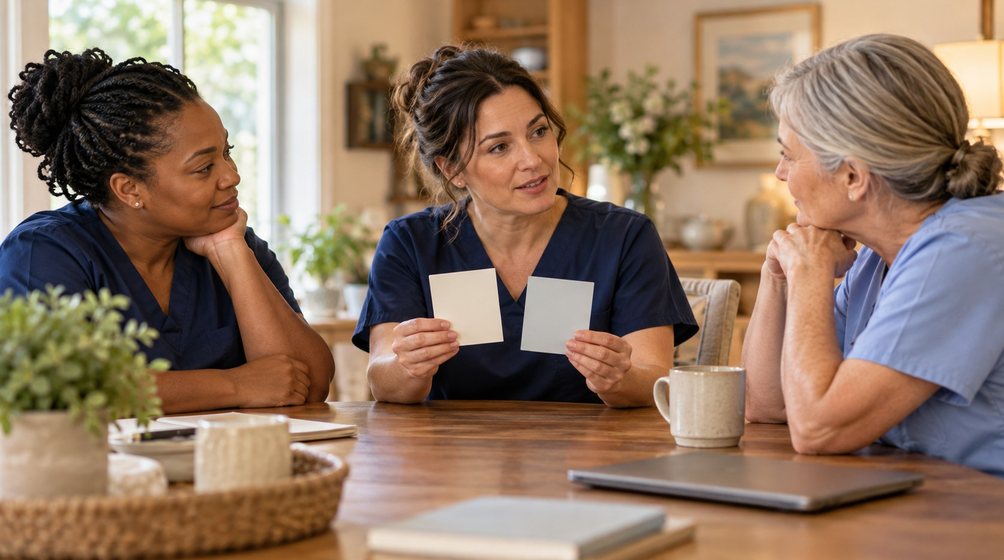
For new nurses entering the field or experienced nurses transitioning to hospice, structured mentorship and preceptor programs are invaluable. These programs pair developing nurses with seasoned mentors, providing guidance, practical experience, and emotional support. This hands-on learning environment helps new nurses confidently navigate the complexities of hospice care, fostering a strong foundation for their career growth.
Charting Your Growth Trajectory in Hospice Nursing
A career in hospice nursing can evolve significantly over several years. A newly registered nurse might begin their journey providing direct patient care, gaining invaluable experience. Within a few years, they might pursue and achieve their CHPN certification, deepening their specialized knowledge and confidence. From there, pathways diverge: some might become a charge nurse or a team lead, while others might explore roles as a hospice educator, sharing their expertise with new staff, or specialize in areas like palliative wound care. With further experience and potentially an advanced degree, a hospice nurse could ascend to a clinical nurse specialist role, a nurse manager position, or even a director of patient care services, significantly impacting the organization’s strategic direction and quality of care.
The field is dynamic, with a growing demand for specialized hospice and palliative care nurses driven by an aging population. Many organizations now treat professional development as a way to recruit and keep nurses, not just to build skills.
Conclusion
Professional development in hospice nursing is a continuous and rewarding journey. From obtaining the foundational CHPN certification to pursuing advanced degrees and leadership roles, nurses have numerous opportunities to grow their expertise and impact. Investing in education and specialized training not only elevates individual careers but also enhances the compassionate, high-quality care that hospice patients and their families deserve. By embracing these growth opportunities, hospice nurses can truly embody the philosophy that every moment matters, enriching both their professional lives and the lives they touch.
If you’re a compassionate and dedicated nurse looking to advance your career in hospice care and make a profound difference, we invite you to explore opportunities with Cairo Hospice. Our team is happy to talk with you about your goals.
To learn more about joining our team and current openings, please visit our careers page.
Key Takeaways
- The CHPN certification is a vital credential for hospice nurses, validating specialized expertise and building professional recognition.
- Hospice nursing offers diverse career advancement paths, including leadership roles (e.g., nurse manager, director) and specialty tracks (e.g., grief counseling, pain management).
- Employer support, such as help with education costs, certification, and mentorship, can make continuous growth in hospice nursing easier.
Questions about hospice for someone you love?
Our team is here 24 hours a day. Talk it through with us, with no obligation.