
For Families
Hospice Care in Rural Ohio: Compassion Close to Home
Let's start with a conversation.
Free, no obligation. In person or over the phone.
Refer a patient.
Same-day admissions when the patient and family are ready.
Intake email
intake@cairohospice.comFor a time-sensitive referral, please call. The intake line is open 24/7.
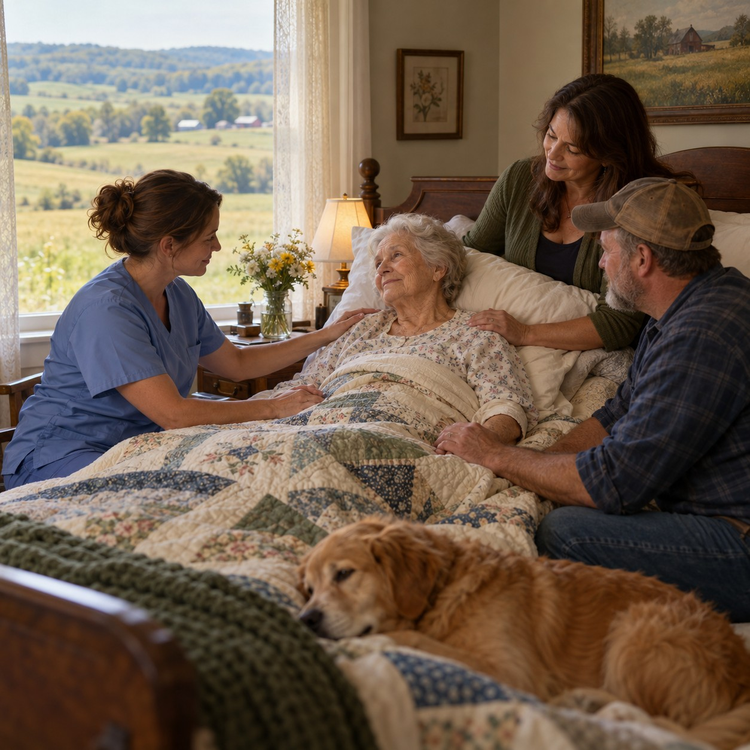
Life in Ohio’s smaller communities is built on connection, independence, and the comfort of familiar surroundings. End-of-life care should honor these values, not disrupt them. Hospice care comes to the patient, so families in rural areas can get support without leaving the homes and towns they love.
Choosing hospice care is a profound decision, and for those living in the countryside, the question of access can add another layer of uncertainty.
This article explores how hospice care works in rural Ohio, from the logistics of rural travel to the strengths of close-knit community support.
The Unique Strengths of Rural Hospice Care
Receiving care at home is often a primary goal for hospice patients, and this is especially meaningful in a rural setting. The peace of being in one’s own bed, surrounded by familiar fields or gardens, is a powerful source of comfort. Beyond the physical home, rural life is defined by community. Neighbors know each other, local church groups offer support without being asked, and a sense of shared history creates a strong safety net.
Good rural hospice care respects and works with this existing network. A hospice team doesn’t just see a patient. They see a valued member of a community, and they work alongside family, friends, and local organizations to create a circle of support that honors your loved one’s life and legacy right where they belong.
How Rural Hospice Visits and Support Work
A common concern for families is how a hospice team can provide consistent, reliable care when homes are miles apart. Hospice teams that serve rural areas plan their visits around travel distances so care stays consistent and responsive.
Hospice services for rural families include:
- Scheduled Visits: Nurses, aides, social workers, and chaplains visit regularly based on the patient’s plan of care.
- Responsive Support: Hospice provides 24/7 on-call support for urgent needs. A nurse can talk you through the situation over the phone and arrange an in-person visit when needed.
- Equipment and Medications: The hospice team arranges the medical equipment a patient needs at home, such as a hospital bed, oxygen, or a walker. Medicare’s hospice benefit covers medications for symptoms related to the hospice diagnosis, with a copayment of up to $5 per prescription.
Providing hospice care in rural settings involves navigating challenges like travel distances and staffing. According to the Rural Health Information Hub, overcoming these hurdles is essential to ensure equitable access to quality end-of-life care.
Embracing Community Connections in Small Towns
In smaller communities, support often comes from every direction. The local church, the neighbor who drops off a meal, and the friends who stop by to share stories are all vital parts of the care team. Hospice social workers and chaplains can help connect families with these local resources.
By fostering these relationships, hospice can help strengthen the natural bonds that make rural communities so resilient. Hospice adds clinical expertise and structured support to the compassion already present in these communities.
Navigating end-of-life care in a rural area shouldn’t be a source of stress. With the right hospice team, your family can focus on what truly matters: making every moment together meaningful.
Cairo Hospice has offices in Ohio, Indiana and Pennsylvania. To ask whether we serve your area, please call Cairo Hospice at (614) 910-2662. You can also download our Complete Guide to Hospice Care for comprehensive information about the services available to you and your family.
Key Takeaways
- Hospice care can come to families in rural communities, so loved ones can stay in the homes and towns they know.
- The hospice team arranges needed medical equipment and covered medications for the home.
- Good rural hospice care works with the strengths of rural life, including support from neighbors, friends, and local community groups.
Questions about hospice for someone you love?
Our team is here 24 hours a day. Talk it through with us, with no obligation.