
Hospice Careers
Faith, Comfort, and Connection: The Vital Role of Hospice Chaplains
Let's start with a conversation.
Free, no obligation. In person or over the phone.
Refer a patient.
Same-day admissions when the patient and family are ready.
Intake email
intake@cairohospice.comFor a time-sensitive referral, please call. The intake line is open 24/7.
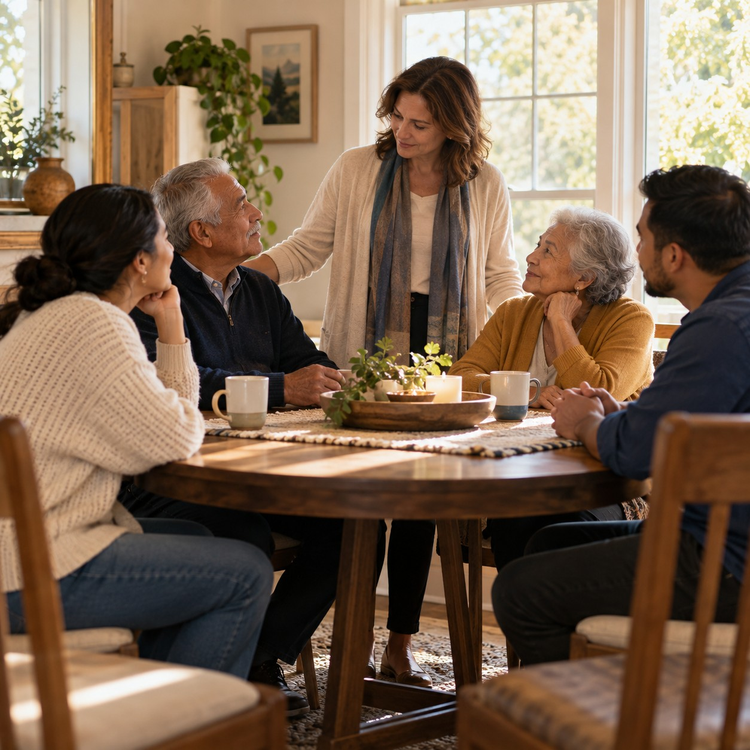
When we think of end-of-life care, we often focus on physical comfort and managing pain. Yet, the end of life is also a profound spiritual journey, a time of deep reflection on life’s meaning, purpose, and legacy. This journey is unique to each individual and often extends beyond the boundaries of organized religion. It is in this sacred space that a hospice chaplain offers gentle guidance, compassionate listening, and unconditional support.
A common misconception is that a chaplain’s role is solely to pray with the religious. In reality, modern hospice chaplains are highly trained spiritual care specialists who serve people of all faiths, beliefs, and those with no faith at all. They are essential members of the care team, dedicated to honoring each person’s unique story and values.
This article explores the vital work of hospice chaplains, from facilitating sacred conversations to supporting families through grief, and clarifies their role as a source of comfort and connection for everyone at the end of life.
More Than Prayer: The Core Work of a Hospice Chaplain
A hospice chaplain’s primary tool is listening. They begin by conducting a spiritual assessment, which is not a test of faith but a gentle conversation to understand what gives a person’s life meaning. This could be family, nature, art, a connection to a higher power, or a personal philosophy. Their focus has shifted from a clergy-centric model to that of a specialized spiritual care provider, centering on universal human needs like hope, forgiveness, and connection rather than specific religious doctrines.
From this understanding, their work unfolds in many ways:
- Emotional and Spiritual Counseling: They create a safe, non-judgmental space for patients to explore complex emotions like fear, anger, regret, and peace. Their visits can also ease loneliness.
- Legacy and Life Review: Chaplains help individuals reflect on their life’s journey, celebrate accomplishments, make amends, and articulate the legacy they wish to leave behind.
- Facilitating Rituals: Whether it’s a prayer, a meditation, a song, or simply sharing a meaningful memory, chaplains help create and facilitate rituals that bring comfort and honor a patient’s traditions.
- Family Support: A chaplain’s care extends to the entire family. They help loved ones navigate spiritual or existential distress, cope with anticipatory grief, and find strength in their own belief systems.
Spiritual Support for Everyone: An Interfaith Approach
One of the most important aspects of a hospice chaplain’s role is their ability to serve a diverse community with cultural sensitivity and an open heart. They are trained to meet people exactly where they are, without an agenda. This means their support looks different for everyone.
For someone who is devoutly religious, a chaplain can offer prayer, read sacred texts, and connect them with their faith community. For an atheist or agnostic, a chaplain might focus on existential questions, helping them find peace in their relationships, their life’s work, or their connection to the natural world. Focusing on universal human themes lets chaplains support patients and families from all backgrounds.
A Collaborative Role in Holistic Care
Under federal rules, every Medicare-certified hospice must assess spiritual needs and offer spiritual counseling. The rules also require an interdisciplinary group that includes a doctor, a registered nurse, a social worker, and a pastoral or other counselor. This team, often joined by a home health aide, works together to create a holistic plan of care that addresses the patient’s physical, emotional, and spiritual needs.
A chaplain’s insights are crucial for comprehensive care. They can identify when unresolved spiritual pain is manifesting as physical or emotional distress. Chaplains help with the “why” questions of meaning and purpose that often come up at the end of life. Left unexplored, these questions can cause real suffering. Their presence also supports the well-being of the medical staff, helping colleagues process the emotional and moral weight of their work.
The Rigorous Training Behind the Compassion
Many hospice chaplains complete Clinical Pastoral Education (CPE), and some earn board certification. Unlike community clergy, a board-certified chaplain must meet professional standards set by certifying bodies such as the Board of Chaplaincy Certification Inc. (BCCI). This typically includes a graduate-level theological degree and multiple units of CPE.
CPE is an intensive, hands-on program where chaplain interns work in clinical settings under expert supervision. Programs are accredited by groups such as ACPE. This education equips them with advanced skills in crisis intervention, grief counseling, and navigating complex ethical dilemmas. This specialized training ensures they can provide competent, clinically integrated spiritual care in a healthcare environment.
If you have questions about how spiritual support can bring comfort to your family, our compassionate team is here to provide answers and guidance. You can speak with a Cairo Hospice care coordinator by calling (614) 910-2662.
For a complete overview of the services available, we invite you to download our Complete Guide to Hospice Care.
Key Takeaways
- Hospice chaplains are clinically trained spiritual specialists who provide support to people of all faiths, beliefs, and non-beliefs by focusing on universal human needs like meaning, hope, and connection.
- As core members of the hospice interdisciplinary team, chaplains collaborate with medical staff to ensure a holistic plan of care that addresses spiritual pain as well as physical symptoms.
- Many hospice chaplains complete Clinical Pastoral Education (CPE), and some earn board certification, which requires a graduate degree and several units of CPE.
Questions about hospice for someone you love?
Our team is here 24 hours a day. Talk it through with us, with no obligation.